
hockey goaltender load management & strength development

Staying healthy is a skill, and the further your career advances, the more your body is asked to handle. Our Goalie Strength Development counts the force you're absorbing with a butterfly counter, biwekly hip/groin/low back testing, and monthly full body testing which powers the our models that catch problems before they become injuries. From our testing, you'll receive daily prescription prehab & weight room plans that fit around your ice times while every number you put up is measured against goalies at your level and the next; from high school to juniors, NCAA, and pro, so you always know you're progressing.

know before you train

Can't find an answer? Contact our team at info@liquidsportslab.com.

How is this different from regular off-ice training?

Most off-ice programs are written for skaters and then adjusted for goalies. Goaltending asks different things of your body: deep and repeated hip rotation, hard pushes side to side, and a lot of time in positions nobody else on the ice spends time in. We start by testing what your body actually does, then build the program around those results and around your ice schedule. You get a plan written for your body and your season, not a template with a few swaps.

Why do the numbers matter? I already know when I feel good.

Feel is real, but it lags. By the time something feels wrong, it has usually been heading that way for weeks. Testing catches the trend early, like one side dropping off or a change in how you're absorbing force, so we can adjust the program before it turns into time off the ice. The numbers also turn "get stronger" into a specific target you can watch move, instead of a feeling you're chasing.

What does the testing involve, and how often do I do it?

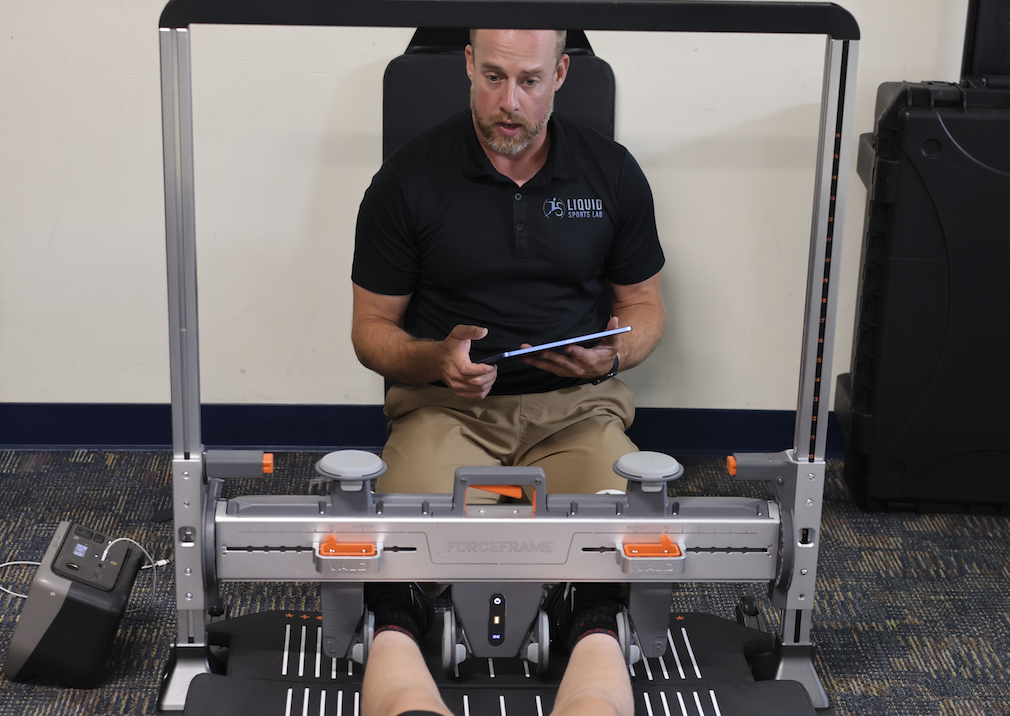
It comes in two parts. At the facility we take you through a full-body assessment: groins, hips, back, and the rest of your upper and lower body, measuring both range of motion and strength so every area gets a real number instead of a hands-on guess. Then you leave with a butterfly counter that runs on your phone. It's a computer vision model that counts your drops, so we know the volume your body actually absorbed that week rather than what you estimated afterward. The facility testing gets repeated so we can see what moved, and the butterfly count runs the whole time in between.

Can I do this in-season, around my ice time?

Yes, and that's the point. Load management only means something if it accounts for what you're already doing. We build your weight room work around your practices and games, so the heavy days land where they won't cost you on the ice and the lighter days land where you need to recover. In a busy stretch, that often means doing less in the gym on purpose.

How does the math make sure I keep progressing?

Every block of training starts from your own numbers and ends with a retest, so progress isn't a guess. We compare where you are now against where you were, and against goalies at your level, then set the next block's targets off that gap. If a number is moving, we keep pushing it. If it stalls, or one side starts falling behind the other, that's a signal to change what you're doing rather than add weight and hope. The math doesn't make you stronger on its own. It makes sure the work you're putting in is still the right work.